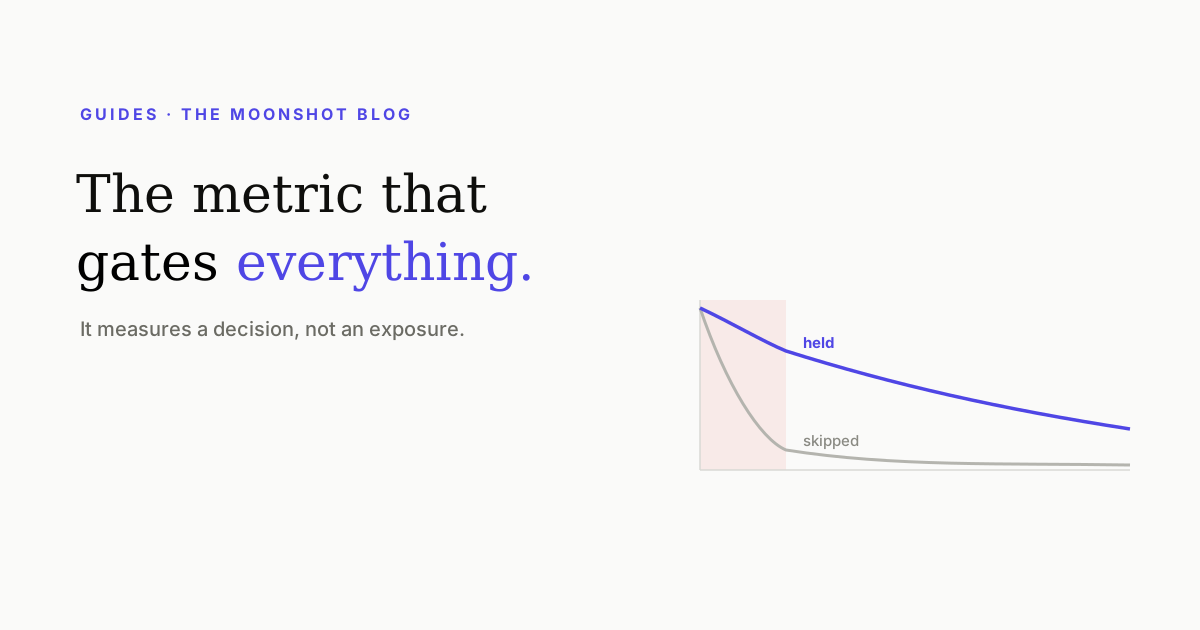
A new number turned up in creator analytics and it’s the most useful one Instagram has shipped in years — because unlike views, it measures a decision somebody made about your video rather than how many people happened to be shown it.
What it is
Skip rate is the proportion of viewers who leave your Reel almost immediately — within roughly the first three seconds. High skip rate means most people who saw it scrolled straight past. Low skip rate means the opening held them.
It replaces the older framing of “view rate” or “watched past three seconds”, and the inversion is deliberate. A view is an outcome partly determined by distribution: show a clip to more people and you get more views regardless of quality. A skip is an action, taken by a person, about your specific video. It is much harder to flatter yourself with.
Why it’s the number that gates everything
Distribution is bought in batches. Your clip goes to a small seed audience; the system reads what they do in the opening seconds; if they stay, it buys a bigger batch, with colder viewers each round. Skip rate is the closest published proxy for the input to that decision.
- It runs before every other metric. Watch time, shares and saves are all computed over the people who stayed. Skip rate decides how many of those there are.
- It’s where the leverage is. Improving your second half improves the experience of people who already stayed. Improving your first three seconds changes how many people ever get there.
- It rises as reach grows. Later batches are colder, so a clip that travels will see its skip rate worsen — that’s the metric working, not the clip degrading.
How to read it alongside the rest
| Skip rate | Watch time | What it means | What to fix |
|---|---|---|---|
| High | Meaningless (nobody stayed) | The opening isn’t landing | The first three seconds |
| Low | Low | Hook works, the promise isn’t paid | Deliver something concrete before ten seconds |
| Low | High, no shares | Watchable but not worth passing on | Give it a takeaway, an argument, or a punchline |
| Rising as reach grows | Steady | Normal — colder audiences skip more | Nothing. This is the clip working |
The full four-branch version of this, including the case where views are fine and followers don’t move, is in Why your Reels get no views.
The five things that actually move it
- Text on screen at frame one. Not fading in — present, full size, in the first frame. Most feed viewing starts muted, and a stranger with nothing to read spends the decision window working out what they’re looking at.
- No runway. Cut everything before your first real sentence. If the clip opens with a greeting, you spent the window on it.
- Movement in the opening frame. Enter mid-gesture. A static talking head starting from rest reads as a paused video.
- Audio at level immediately. No silence, no fade-in. A fade is a four-second commitment from someone who has given you three.
- A promise a stranger can evaluate. Specific beats intriguing. Vagueness gets skipped by people who would have liked the video.
Testing it properly
Skip rate is unusually well suited to experiments because the variable is small and isolated. Change one thing about your openings, hold everything else, and post five clips.
- One variable at a time — a title card, or a trimmed runway, not both.
- Five posts minimum. Individual clips are noise.
- Compare like with like: a clip that reached mostly followers isn’t comparable to one that went wide.
- Keep the ones that worked as a template. The point of the number is to make hooks a repeatable craft rather than a vibe.
Quick answers
What is skip rate on Instagram?
The share of viewers who leave a Reel almost immediately — within roughly its first three seconds. It's the inverse framing of the old 'watched past 3 seconds' idea, and it points at the same moment: the scroll decision.
What's a good skip rate?
Compare against yourself, not a published benchmark. Absolute numbers vary enormously by niche, format and how cold your traffic is, and any single figure quoted as universal is being repeated rather than measured. What's meaningful is the spread between your best and worst clips, and whether it's improving.
Why did Instagram move to skip rate?
Because it measures a decision rather than an exposure. A view is partly a function of how many people were shown the clip; a skip is something a specific person did after seeing it. It's a cleaner signal about the content itself, which is exactly why it's worth optimising against.
How do I lower my skip rate?
Everything that lowers it happens in the first three seconds: something legible on screen at frame one, no runway before your first real sentence, movement in the opening frame, and audio that starts at level. Nothing you do after second four moves this number.
Fix the three seconds this number measures
Moonshot drafts hook lines from your own transcript and renders them as a full-size title card from frame one — the single biggest lever on skip rate.
Open Moonshot free